About Valerian
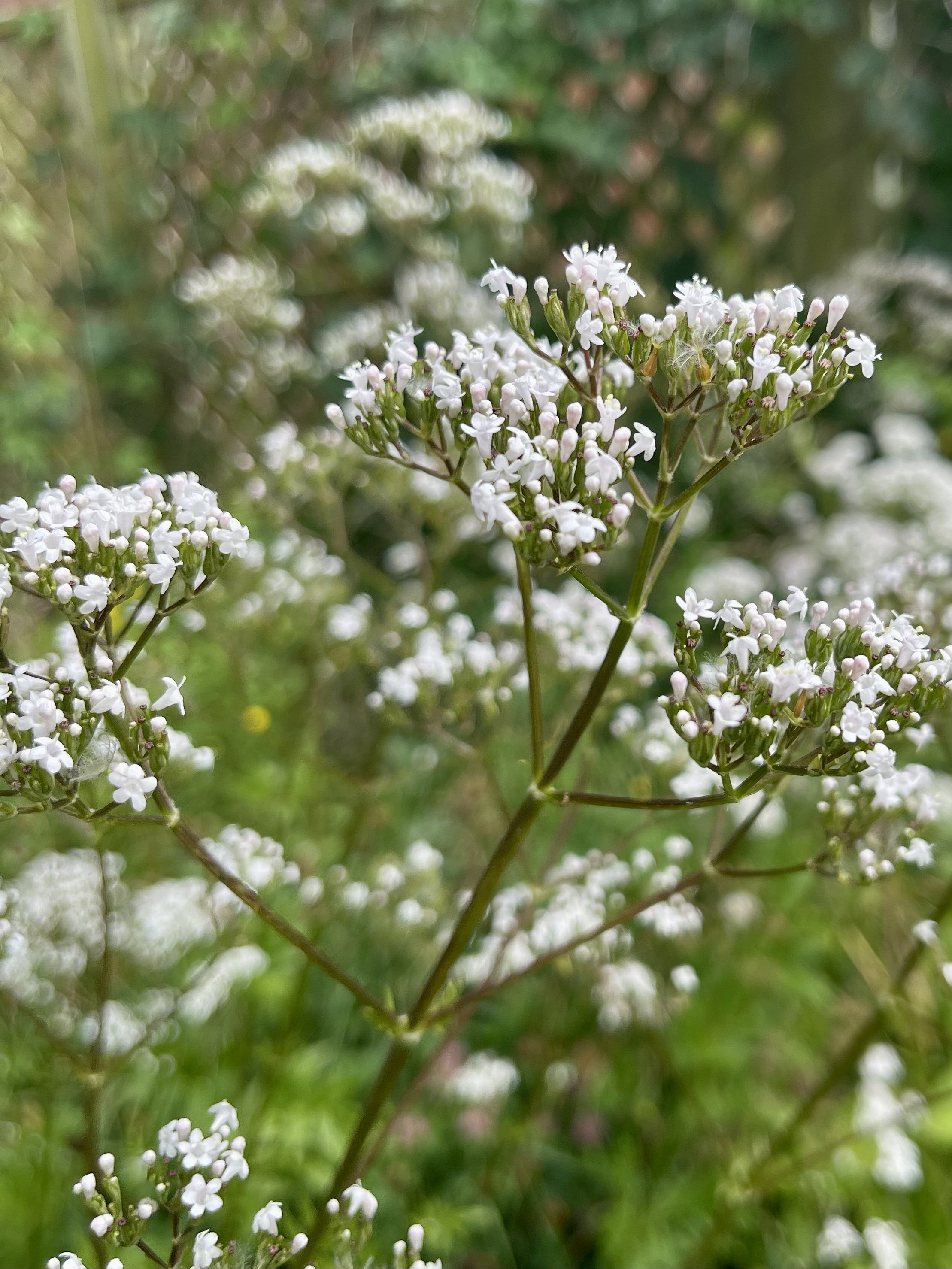
Valerian is a tall, graceful perennial that rises well above most of its neighbours by midsummer, carrying wide, softly domed heads of tiny flowers in white and the palest blush pink. The stems are hollow and grooved, the leaves neatly divided into pairs of toothed leaflets, and the whole plant has an airy, almost meadowy quality that suits a relaxed border or a damp corner beside water. On warm evenings the flowers give off a sweet, honeyed scent that drifts surprisingly far.
The roots tell a different story. Where the flowers are sweet, the dried root has a heavy, earthy, unmistakably musky smell that people either tolerate or thoroughly dislike — and which cats find utterly irresistible, much as they do catnip. That curious quirk lies behind one of the oldest pieces of Valerian folklore: the Pied Piper of Hamelin was said to have carried Valerian root in his pockets, the rats following the scent as readily as they followed his music.
Native across Europe and much of temperate Asia, Valerian has one of the longest continuous records of any European herb. It appears in Greek and Roman writings, was grown in monastery physic gardens throughout the Middle Ages, and the name itself is usually traced to the Latin valere, meaning to be strong or to be well. Few plants have kept the same reputation for quite so many centuries.
Uses & Benefits
Culinary Uses
Valerian is not generally considered a culinary herb because the roots have a strong, earthy aroma and flavour that most people find unpleasant. However, over the years I have had several customers tell me they enjoy making a calming evening tea from the fresh or dried leaves rather than the roots. While this is not the traditional part of the plant used in herbal medicine, it is an interesting reminder that people often develop their own ways of enjoying herbs.
The flowers are also valuable in the garden, attracting bees and other beneficial insects while adding height and a gentle, cottage-garden feel to the borders.
Medicinal Uses
Valerian root is one of the best known of all the traditional calming herbs. Across European herbal practice it has long been used to help ease restlessness and settle a busy mind at the end of the day, and it is most often taken as a tea or tincture made from the dried root, usually in the evening.
It earned a particular place in wartime, when it was widely used in Britain during the First and Second World Wars to help ease the strain and shock felt by both soldiers and civilians. That history says a good deal about how well established and how well trusted the herb had become.
Valerian is not a herb that suits everybody. Its effect varies from person to person — a small number find it rather enlivening instead of settling — and the smell alone puts some people off entirely. Everything shared here is offered for interest and education rather than as medical advice.
Growing & Harvesting
Growing
Valerian is an easy, thoroughly hardy perennial that does best in a deep, moisture-retentive soil in sun or light shade, and it is happiest of all where the ground stays reliably damp. Give it room, as it can reach well over a metre in flower and may need a discreet support on an exposed site. It is easily raised from seed sown in spring, or by lifting and dividing an established clump in autumn, and it self-seeds gently if the flower heads are left to ripen.
Harvesting
It is the root that is gathered, and patience pays: plants are usually left to grow for a full two years before lifting, when the roots have real substance to them. Autumn is the time, once the top growth has died back and the plant has drawn its energy downwards. Lift the clump carefully, wash the pale roots clean of soil, split any thick pieces so they dry evenly, and dry them slowly in a warm, airy place. Once brittle, store them in an airtight jar away from the light — and somewhere the cat cannot reach.
Cautions
Valerian is a strong herb rather than a gentle everyday one, so it is worth treating with respect. Because it is traditionally used to encourage rest, it is sensible to avoid driving or operating machinery after taking it, and it should not be combined with sedative medication, sleeping tablets or alcohol without proper advice. It is not recommended during pregnancy or while breastfeeding, and it is not a herb for long, unbroken use. A small number of people find it has the opposite effect and feel unsettled rather than sleepy, which is simply a reminder that herbs suit different people differently. If you take regular medication or have any concerns at all, do speak with your doctor or a qualified herbalist first. Everything shared here is offered for interest and education rather than as medical advice.