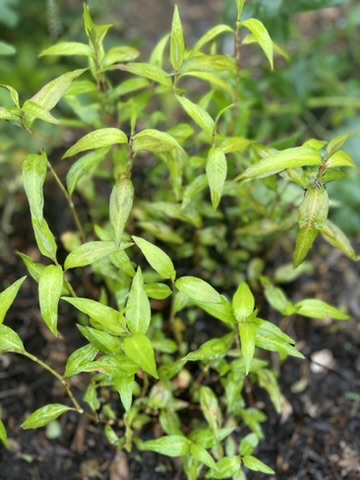
About Vietnamese Mint
Despite its common name, Vietnamese mint isn't a true mint at all. Also known as Vietnamese coriander or rau răm, it belongs to the knotweed family, and one taste of its leaves tells you it's something quite different — a bright, peppery flavour with a distinct hint of coriander.
Its slender, pointed green leaves often have a distinctive dark reddish V-shaped marking, making it easy to recognise as it spreads along jointed stems. Native to Southeast Asia, it has long been an essential part of traditional Vietnamese cooking, where it is picked fresh and served generously alongside many everyday dishes.
Uses & Benefits
Culinary
In Vietnam the leaves are tossed through salads, scattered over soups and noodle dishes, and tucked into fresh rice paper rolls. It is also the herb traditionally served with laksa, which is why it is sometimes called laksa leaf. The leaves are best used fresh and are generally added towards the end of cooking to retain their distinctive peppery flavour.
Medicinal
Across Southeast Asia, Vietnamese mint has traditionally been eaten as a digestive herb, served alongside rich or heavy dishes to help balance a meal. In folk tradition it has also been taken as a warming tea and used in simple household remedies. These are traditional uses rather than proven benefits, and today it is best enjoyed as a flavourful culinary herb.
Growing & Harvesting
Growing
Vietnamese mint loves warmth, moisture and rich soil, and is happiest in a sheltered spot that never dries out completely. It is sensitive to frost, so in cooler climates like ours it is best grown in a container that can be moved somewhere protected over winter.
Vietnamese Mint is also wonderfully easy to propagate. Here at The Herbal Garden, I recently placed some stem cuttings in a glass of water, and they developed roots within five to seven days, ready for potting up.
Harvesting
Pick the young leafy stems regularly throughout the growing season, whenever you need them in the kitchen. Regular picking encourages the plant to become bushier and more productive, so there's no need to be shy with your harvest. As the leaves are at their best fresh, we simply pick what we need, when we need it.
Cautions
Vietnamese Mint is widely enjoyed as a culinary herb. However, there is limited research into the safety of larger quantities or medicinal preparations, particularly during pregnancy and breastfeeding. This information is provided for educational purposes rather than as medical advice.